Wednesday, July 30, 2008

Quebrada Llanganuco, Pisco

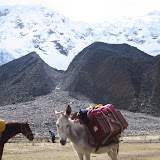
Climbed Pisco in Quebrada Llanganuco. It was a pretty easy hike, but it was still a lot of heavy breathing. i think the summit was around 18,500 ft.

i think i am getting good a the logistics of Peruvian transportation because i don´t have any fun stories to go along with this peak. Except that there were 30 British high school students climbing the peak also. Wow, that was a logistical masterpiece to witness with guides, teachers, porters, burros, cooks etc. The students would crowd into the little refugeo (backcountry cabin with food and beer at base camp) rolling about 15 deep and overwhelm the place. but sometimes they would play guitar and sing, so it made it ok. then the old guys like me and some others even older guys from Colorado would join and we´d all be playing and singing old tunes. it worked out just fine.

i am back in Huaraz for a couple more days.
-Chris
Quebrada Llanganuco, Pisco

Thursday, July 24, 2008

Hatun Machay

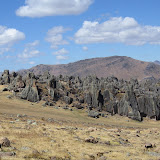
I needed a break from ice and snow in the Cordillera Blanca, as well as from the traffic and holiday festivities of Huaraz. So, I booked a ride to Hatun Machay. I met four Israeli´s on the ride out there and we rock climbed at Hatun Machay (at a mellow 14,000 feet) and stayed in the recently built but rustic refugeo.

Hatun Machay

Sunday, July 20, 2008

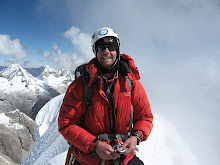
Alpamayo - French Direct

Alpamayo, Quechua for "muddy river", is one of the most saught after peaks in the Cordillera Blanca. It took us 7 days to climb the mountain with days of hiking, approaching, resting, and climbing. The approach from base camp (14,500 feet) to the high camp (18,000 feet) was through a glacier that required some difficult AI3 ice climbing with heavy packs laidened with supplies for 3 days. After a rest day at the high camp and very little sleep, we set out to climb Alpamayo at 1:30 a.m. The first snow and ice was climbed in the dark by headlamp and a full moon. Temperatures were around 10 degrees F and our insulated water froze. Gu, Snickers, and Powerbars are hard to swallow at 19,000 feet without water. With dry mouths we pushed on through the 65 degree ice. By sunrise we were into the 2nd pitch of ice and were pelted by ice from 4 Peruvian climbers above, erg. We likely sent ice down to the 4 Basque climbers below us! After 4 or 5 long pitches of AI3 ice, we summitted at 10 a.m. at 19,500 feet. We rappeled the route over the Basque folks using old v-threads and fixed pickets and were back at high camp by 1:00 p.m.

Two days after summitting Alpamayo, we arrived at the trailhead at the village of Quechapampa at 5 p.m. Brad and I were worried about not finding a collectivo (inexpensive public bus) for the 3 hour ride to Huaraz. Brad was leaving for Lima the following day, so our urgency to get to Huaraz was hightened. Serendipidously at the trailhead, we met two French climbers hiking out behind us and who´s English and Spanish were as good as my French. Immediately I knew we needed to team with the French to gain a ride to Huaraz at a reasonable fare. Four seconds after meeting the French two taxi´s arrive, one from each direction on the one-lane dirt road that constitutes most of Quechapampa. Juxtiposition in the dirt road - 1 trailhead, 2 dirty Americans, 2 dirty French, 2 white identical Toyota Corolla taxis facing hood to hood, 2 taxi drivers (cabbies), 1 arriero (our burro driver) and 1 overloaded small burro, and 4 idling compensinos (local farmers). The negotiations began with the 12 of us huddled over the hood of a taxi - the cabbies argued 180 Soles, the Americans demanded no more than 80, the French discussed wtih each other and cajoled one cabbie on paper for a price for two to an intermediary village, the compensinos teased the cabbies about overcharging the gringos, the burro was tired, the cabbies were trying not to compete and lower the price, the arriero told the Americans it should cost 120, the Americans insisted the French to join them as a team of 4, the French were still negotiating a 2 person fare to the wrong village, the arriero smiled and laughed, the cabbies began to sweat, the Americans pretended to walk away in disgust, one cabbie broke down to 140 Soles, the Americans emphatically convinced the French that the 4 of us need to take the 140 - its a good deal!

Deal done, but the most dangerous part of the climb comes next. Four climbers and one taxi (all taxis in Peru are late 90s Toyota Corolla wagons with tiny tires) barrel down 4,000 veritcal feet of one-lane dirt road, winding and contouring along the mountain topography tailgating behind a dump truck! The dust behind the truck formed an urban whiteout but the taxi continued to tailgate and honk his horn every 3 seconds signalling his desire to pass. With dust all over the inside of the car and our faces, I had the terrifiying position of sitting in the front seat! Finally passing the truck, the cab continued to race around blind corners honking to alert potential on-coming traffic on the one-lane dirt road. Sitting shotgun, I witnessed the narrow calculated misses of dogs, potholes, other taxis, grandmothers, and children. With each close pass, the cabbie gave a strong 3 toots of the horn. It was a tense 3 hour ride.

Maybe this is why I climb.
-Chris

Alpamayo - French Direct

Friday, July 11, 2008

Quebrada Ishinca

Last Sunday we began our approach to acclimation peaks up Quebrada Ishinca. Our trip began with the young bus driver lashing our four 50 lb bags to the roof of the little collectivo (small toyota mini-bus used by locals for public transportation) with a single strand of thin cotton string. Brad Mastros and I shrugged our shoulders trusting the driver and crammed into a little bus with 12 other locals only for the bus to return to the depot due to road closures from a marathon race. So we dragged our bags to street corner and hailed down a much more expensive taxi to get us through the traffic jam and to the hills, but was also delayed by the race. During the taxi ride up the dirt road we had to pay and heavily negotiate (with our non-existent spanish) to get through road construction, an impromtu toll erected by compensinos (local poor farmers), a burro driver and two burros, and additional taxi ride up to the trailhead proper. I spent 10 minutes negotiating with a drunken compensino for his felt hat which was too small for me and had a large white and green stain on the front brim. I talked him down from 3 dollars to 1 dollar, then he backed out.
Four hours later the burros dropped out bags at base camp at 14,450 ft. in Quebrada Ishinca. After an acclimation hike day, we climbed an acclimatization peak, Urus, to 17,500 ft. It was easy so we planned to climb another acclimatization peak the next day. However, I spent the entire night wearing my down jacket and shivering in my zero degree bag with outside temperatures around 39 degrees. Each hour suddenly hot and droused in sweat, I would frantically try to open the tricky zipper of the sleeping bag, find my flip flops, grab a roll, and burst out the tent to the spot 20 feet from camp were my body would purge everything possible from every oriface. I spent the next 30 hours in the tent, slowing drinking warm Cyotmax drinks and eating easily digestible ramen noodles. Oh, praise to lovely ramen noodle gods for their magic! After the evening of purge and rehydration the following day, I was ready to go and attempt Toclaraju´s West Face Direct, a moderate ice climb at nearly 20,000. But clouds obscured the peaks so we decided to bail and arrange burros. Before we could arrange burros, the friendly Croatian expedition gave us three days of food including heavily smoked and salted Croatian pork that was over a month old! They insisted it was ok to eat, it tasted great and we´re not dead yet!
Heavy negotiations again were necessary to make the simplest contract with the burro driver, but we finally reached the trailhead Friday afternoon just in time to conjole our way onto another teams privately chartered collectivo for the ride back to Huaraz. By 4;00 that afternoon, we drank Cuzqueno negro, Peru´s local black ale vaguely reminescent of Berkeley´s Death and Taxes, as we sat on the plaza sharing gastrotestinal distress and other stories with fello climbers.

Pictures of Quebrada Ishinca and climbing Urus are here:
Quebrada Ishinca

Salud!, Chris

Friday, July 4, 2008

Frisbee at 10,200 feet

Today i played frisbee with some new friends from California Cafe (run by a couple from Santa Cruz). there were about 16 of us, a mix of locals and gringos. we all crammed into taxis for about 60 cents per person and headed up to a grassy field above Huaraz at an elevation of 10,200 feet with views overlooking the Cordillera Blanca. super awesome. we could also hear blasting from the local gold mine. i have only been acclimating for one day so the running was very very hard, especially when guarding the acclimated locals!!

is anyone actually reading these?
Ciao

Thursday, July 3, 2008

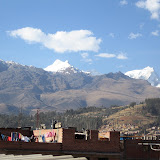
Arrived in Huaraz

Hola,
After 30 hours of traveling by air, taxi, and bus i arrived in Huaraz. During my flight over Lima, I saw all the shanty towns and a large tire dump on fire on the beach. My fist land experience was a 30 minute cab ride in the middle of town during rush hour! Wow, that was super crazy with all the calculated near misses with cars, buses, dogs and people. the drivers there are excellent. the first taxi guy wanted 130 soles, the second 55, the last 25 (about 9 dollars). the farther you get from the terminal, the less expensive it gets. I was overwhelmed with the smell of exhaust in Lima. my second experience in Lima was a four hour wait at the bus terminal in a bad part of town, but all of Lima seemed like a ´bad part of town´ to me. I was afraid to leave the terminal. The bus to Huaraz first went along the desert coast and the road cut into huge sand dunes hundreds of feet high that overlayed a volcanic rocky Pacific coast like California´s. Four six hours later we crested the 12,500 foot pass leading to Huaraz. Sealevel to 12,500 in six hours is the fasted i have ever accended, but the small headache passed upon arriving in Huaraz.
In Huaraz, all is good and my bags are in tact. my room cost me 5 dollars a night and the showers are caliente. the bed spread is all multicolor Peruvian style. i love it here so far but still am intimidated by my surroundings, local food, and my poor espanol. but that all will come soon. the elevation here in Huaraz is about 10,000 feet so i need to acclimate here for about 3 days before heading up into las quebradas (canyons) escalar los montanas (to climb the mountains). See my spanish is getting better all ready! i am playing ultimate frisbee in the mountains tomorrow afternoon with some Americans from a cafe! I could see staying here for a while. but i hope to go to Cusco and Lake Titicaca to teh south and possibly a surfing spot up north near the border with Ecuador.
_Chris
Huaraz

Tuesday, June 10, 2008

Alaska 2008 Trip Report

For my Alaska 2008 photos, see the post below. The following is my trip report submitted to the Kansas City Climbing Club newsletter. Although I live in the San Francisco Bay Area now, I learned to climb in Kansas.

The Ruth Gorge

The Ruth Glacier is one of many large glaciers that has carved the flanks of some of the great peaks in the central Alaska Range, such as Denali, Mt. Hunter, Mt. Foraker, and Mt. Huntington. The glacier begins at Denali and sinuously flows down valley, growing larger as it merges with smaller tributary glaciers and finally melts out to a moraine boulder field and the braided Chulitna River about 30 miles from its start. The glacial ice is up to 3,800 feet thick, over a mile wide, and moves at average of 3.3 feet per day.

About halfway down its path, the glacier has carved The Ruth Gorge, or "The Gorge" as locals and climbers call it. The Gorge earns its name from the escarpments of granite, snow, and ice that tower some 5,000 feet above one either side of the glacier. Some of these guardians include The Mooses [sic] Tooth, Mt. Dickey, Mt. Barrille, and Mt. Bradley. The United States Geological Survey renamed the Mooses Tooth (albeit without the grammatically correct apostrophe) to reflect a translation of the original Athabascan name. With the relatively low elevations (4,500 to 10,200 ft), easy access via a bush plan outfitted with ski's, and so many steep walls, The Gorge has attracted climbers looking for short technical challenges.

My partner Jason Kuo and I flew to Alaska on April 16, 2008. Three days later we flew from Talkeetna into The Gorge in Paul Roderick's (Talkeetna Air Taxi) 1955 single-engine Cessna, "The Beaver", crammed with four clean climbers and about 1,000 lbs. of gear. We climbed, ate, drank, slept, laughed, froze, fried, and got scared in The Gorge for 20 days.

Day 1-2: Build base camp including Megamid kitchen and used snow saw for cutting blocks, and dug an avalanche test pit at the base of Japanese Couloir on Mt. Barrille. Perfect blue bird day!
Day 3: Climb Japanese Couloir on Mt. Barrille in about 8 hours round trip. The route was easier than anticipated due to the technical pitches being covered with 55 degree snow. Cornices were big on summit ridge. Downclimb route.
Day 4: Rest day, dry clothes, socialize along "Ruth Street" with neighbors. There were about 16 climbers in the Gorge.
Day 5: Ski up The Route Canal ice fall to the base of the Mooses Tooth. Another 8 climbers were camped up there and had been dropped off at the base of Mooses Tooth by the air taxi.
Day 6: Climb Ham and Eggs on the Mooses Tooth in 14 hours. Awesome! Mostly 45 degree snow with about 5 vertical steps of ice (WI4) and rock (5.6) that ranged from about 15 to 50 feet. 18 double rope rappels on fixed anchors of pins and nuts and V-threads.
Day 7: Rest day, hot temps.
Day 8: Climb rock traverse pitch (scary 5.9 in crampons) to get into the route Shaken, Not Stirred on the Mooses Tooth. Glad I had those knife blade pitons for the rock pitch. We bailed at a section called the narrows as the mixed and thin ice climbing was going to be over our heads so we rapped route on multiple single nut rap stations and other manky gack. Descend Route Canal in afternoon heat. i recommended traveling through the route canal in the morning due to objective hazards. We punched through a few small crevasses and had a hard time getting our heavy packs down the soft snow. Another party was almost hit by a falling serac. Party at base camp in Megamid kitchen with Salt Lake City, Seattle, and the Norwegian teams.
Day 9-11: Eight days of perfect blue bird days end with a storm whiteout and 2 feet of snow. Read, drink tea, shovel, eat, sleep, shovel, drink whiskey, read, eat, shovel, sleep, shovel.
Day 12: Weather is unsettled but climb Freezy Nuts on London Tower (WI3). Matt of Salt Lake City team solos up to join us. Tunnel through cornice, rap and downclimb route on v-threads, scary pins, and single nut anchors. More yikes.
Day 13: Rest day, weather still unsettled.
Day 14: Rest day and approach 10 miles up the Ruth Glacier in about 5 hours with super light packs to base of the southwest ridge of Peak 11,300.
Day 15: Wake to whiteout conditions. Wait in tent for conditions to improve. Bail at noon with difficulty following our tracks through a crevasse field. Finally arrive out of whiteout at base camp and big party in kitchen tent.
Day 16: Hang over, rest day, tend to blisters.
Day 17: Another rest day.
Day 18: Another rest day, weather still unsettled, some flurries, loosing motivation, Capilene shirt is starting to smell.
Day 19: Weather still unsettled but come to grips that this is normal for Alaska. Attempt first ascent on couloir on shoulder of Mt. Bradley. Bail due to lack of ice.
Day 20: Pack and fly out through brief weather window.

I think I spent a total of about 26 days in Alaska and it cost around $2,500. You could do it cheaper. The Bush pilot was about $550 because we were over weight with too much food. We spent about $900 on food (stupid), but most people could get by on about $400 food for two folks (use Costco in Anchorage). I estimate we ate about 4,000 calories a day. Temperatures in the shade was mostly 5 to 35 degree F, in the sun at base camp up to 65 degrees, and down to about -5 degrees on some of the coldest nights.