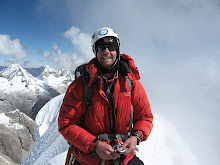
After hanging in town for about two weeks with a few days sport climbing at Hatun Machay and bouldering near town, i am off again to Quebrada Ishinca for three days to climb a nine pitch rock climb, Karma de los Condores. i am going with Kelly Carbone who i know from Oakland, CA, and Alex from Brazil. it is a hard but safe rock climb, famed as the Astroman of Peru. we will see.
i´ll be back in town Tuesday afternoon.
-cj
Saturday, August 30, 2008

Friday, August 22, 2008
Chavin de Huantar
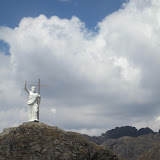
Spent a day at the ruins of Chavin de Huantar that are about 2 hours from Huaraz.
The ruins are Eguiptian aged, around 3,500 to 4,000 years old, some of the olderst in South America.
The ruins are Eguiptian aged, around 3,500 to 4,000 years old, some of the olderst in South America.
 |
| Chavin de Huantar |
Friday, August 15, 2008
Ranrapalca, The North Face
Twenty-two hours is how long it took to climb the North Face of Ranrapalca. Climbing Ranrapalca is representative of my new understanding of what it means to be an "alpinist".
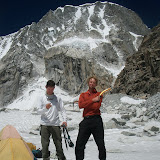
The climb started with 4 days in the Quebrada Ishinca base camp (14,500 ft) waiting for the rain and snow to dissapate. On the 4th day we shuttled a load of gear to the Ranrapalca high camp (17,000 ft) and returned to base camp. On the 5th day we carried the last load to the high camp in the rain and set up a hopefull camp there. On the 6th day, the sky cleared to a miraculously blue cloudless sky! Wonderful. This day consisted of us sleeping in until 10 - eating, napping, eating some more, drinking fluids, scoping out the approach to the climb, more napping, eating, and reading. Went to bed at 6 to get up at 11 pm! all the sleep and eating the day before was to charge us for meager 5 hours of sleep before the climb. we left camp at 12:20am, started climbing the 3,000 ft wall in the dark at 1:30. with headlamps we simulclimbed through some easy 50 degree snow, hard rock, thin ice (JJK, the ice was rotten and about 2 inches thick over rock) to about the half way point when the sun came up. we sumilclimbed some more through more ice and snow to the middle snow finger you can see on the pics of the face. just then the sun hit the face around 8 or 9 and rock and ice started falling down the face but we were tucked safely in the snow couloir by then. buy this time i got really exhausted as i hadn't fully recovered from my previous Shaqsha climb and subsequent fever sickness. so i slowed us way down. at the top of the snow couloir i led over the final rock band, which was loose 5.9 at 20,000. holy cow, that was scary. we summitted at 2:30. our rack consisted of 2 screws, 2 pickets, 8 nuts, 4 cams, 1 hex, and 4 pitons, and we protected the climb with almost exclusively the rock gear. Boy, i don´t won´t climb an alpine climb without those lovely pitons (two KBs and 2 baby angles).
On the summit ridge we post holed in deep powder toward the decent route, the north east face. AFter two long rappels on rock the sun set. We did 4 rappels in the dark on snow from rap stations of two snow bollards, a picket which we left, and a screw. We left the picket and screw without hesitation. then we had to navigate through a heavily crevassed glacier for hours, finding our own way as we were the first party on the mountain after the most recent storm so there were no tracks anywhere. we arrived at our high camp around 10pm. our Argentinian friends were camped next to us and had hot tea for us. most of which i didnt enjoy as i just passed out in my tent. 22 hours round trip. holycow, i am still tired.
The climb started with 4 days in the Quebrada Ishinca base camp (14,500 ft) waiting for the rain and snow to dissapate. On the 4th day we shuttled a load of gear to the Ranrapalca high camp (17,000 ft) and returned to base camp. On the 5th day we carried the last load to the high camp in the rain and set up a hopefull camp there. On the 6th day, the sky cleared to a miraculously blue cloudless sky! Wonderful. This day consisted of us sleeping in until 10 - eating, napping, eating some more, drinking fluids, scoping out the approach to the climb, more napping, eating, and reading. Went to bed at 6 to get up at 11 pm! all the sleep and eating the day before was to charge us for meager 5 hours of sleep before the climb. we left camp at 12:20am, started climbing the 3,000 ft wall in the dark at 1:30. with headlamps we simulclimbed through some easy 50 degree snow, hard rock, thin ice (JJK, the ice was rotten and about 2 inches thick over rock) to about the half way point when the sun came up. we sumilclimbed some more through more ice and snow to the middle snow finger you can see on the pics of the face. just then the sun hit the face around 8 or 9 and rock and ice started falling down the face but we were tucked safely in the snow couloir by then. buy this time i got really exhausted as i hadn't fully recovered from my previous Shaqsha climb and subsequent fever sickness. so i slowed us way down. at the top of the snow couloir i led over the final rock band, which was loose 5.9 at 20,000. holy cow, that was scary. we summitted at 2:30. our rack consisted of 2 screws, 2 pickets, 8 nuts, 4 cams, 1 hex, and 4 pitons, and we protected the climb with almost exclusively the rock gear. Boy, i don´t won´t climb an alpine climb without those lovely pitons (two KBs and 2 baby angles).
On the summit ridge we post holed in deep powder toward the decent route, the north east face. AFter two long rappels on rock the sun set. We did 4 rappels in the dark on snow from rap stations of two snow bollards, a picket which we left, and a screw. We left the picket and screw without hesitation. then we had to navigate through a heavily crevassed glacier for hours, finding our own way as we were the first party on the mountain after the most recent storm so there were no tracks anywhere. we arrived at our high camp around 10pm. our Argentinian friends were camped next to us and had hot tea for us. most of which i didnt enjoy as i just passed out in my tent. 22 hours round trip. holycow, i am still tired.
 |
| Ranrapalca |
Tuesday, August 5, 2008
Shaqsha
Shaqsha was, let´s say, a little rigorous. Arriving at the village of Huaripampa in the morning, my partners James (from Austalia), Kyle (from Seatle) and I were unable to locate any burros to carry our gear to mountain. Shaqsha is a rarely visited peak, so there is not a climber-friendly infrastructure like the other trail heads. but that is partially what drew us to the climb, the adventure of going to the mountains without burros, refugeos, other climbers, and a well warn trail through the snow to the summit.
The town Mayor or doctor (as identified based on being a well-dressed, charismatic guy in a leather jacket who knew everyone in town and certainly didn´t seem like a farmer) informed us that all the burros were being used for construction of a building outside of town. Soooo, we hiked the 7.5 hours to base camp with our heavy packs across country with no trails, burros, or people. then James and I woke at 2 in the morning the next day for the 13 hours summit push, Kyle was sick and didn´t join. We climbed for 13 hours with 4 hours used to decend the 6 pitch climb with only one rope. this meant i had to make about 4 additional V-thread rappel stations in the ice (see photo of one) and we had to downclimb about 5 pitches. it was exhausting but that is what we were looking for, a little adventure. It was a really nice climb up a beautiful southern arete that should be a classic, with steep snow of mostly 50 degrees but up to 80 degrees and some ice pitches up to about 70 degrees. in the pics, our line is the right most arete, it is the same line that is on the cover of the Brad Johnson Guidebook. after the climb, the next day, we had an exhausting 5.5 hour hike out along a aquiduct canal. i am destroyed, and taking two full days off in town doing nothing but reading, writting, eating, and lots of sleeping.
much amore para mi todos amigos,
-Chris
The town Mayor or doctor (as identified based on being a well-dressed, charismatic guy in a leather jacket who knew everyone in town and certainly didn´t seem like a farmer) informed us that all the burros were being used for construction of a building outside of town. Soooo, we hiked the 7.5 hours to base camp with our heavy packs across country with no trails, burros, or people. then James and I woke at 2 in the morning the next day for the 13 hours summit push, Kyle was sick and didn´t join. We climbed for 13 hours with 4 hours used to decend the 6 pitch climb with only one rope. this meant i had to make about 4 additional V-thread rappel stations in the ice (see photo of one) and we had to downclimb about 5 pitches. it was exhausting but that is what we were looking for, a little adventure. It was a really nice climb up a beautiful southern arete that should be a classic, with steep snow of mostly 50 degrees but up to 80 degrees and some ice pitches up to about 70 degrees. in the pics, our line is the right most arete, it is the same line that is on the cover of the Brad Johnson Guidebook. after the climb, the next day, we had an exhausting 5.5 hour hike out along a aquiduct canal. i am destroyed, and taking two full days off in town doing nothing but reading, writting, eating, and lots of sleeping.
much amore para mi todos amigos,
-Chris
 |
| Shaqsha |
Wednesday, July 30, 2008
Quebrada Llanganuco, Pisco
Climbed Pisco in Quebrada Llanganuco. It was a pretty easy hike, but it was still a lot of heavy breathing. i think the summit was around 18,500 ft.
i think i am getting good a the logistics of Peruvian transportation because i don´t have any fun stories to go along with this peak. Except that there were 30 British high school students climbing the peak also. Wow, that was a logistical masterpiece to witness with guides, teachers, porters, burros, cooks etc. The students would crowd into the little refugeo (backcountry cabin with food and beer at base camp) rolling about 15 deep and overwhelm the place. but sometimes they would play guitar and sing, so it made it ok. then the old guys like me and some others even older guys from Colorado would join and we´d all be playing and singing old tunes. it worked out just fine.
i am back in Huaraz for a couple more days.
-Chris
i think i am getting good a the logistics of Peruvian transportation because i don´t have any fun stories to go along with this peak. Except that there were 30 British high school students climbing the peak also. Wow, that was a logistical masterpiece to witness with guides, teachers, porters, burros, cooks etc. The students would crowd into the little refugeo (backcountry cabin with food and beer at base camp) rolling about 15 deep and overwhelm the place. but sometimes they would play guitar and sing, so it made it ok. then the old guys like me and some others even older guys from Colorado would join and we´d all be playing and singing old tunes. it worked out just fine.
i am back in Huaraz for a couple more days.
-Chris
 |
| Quebrada Llanganuco |
Thursday, July 24, 2008
Hatun Machay
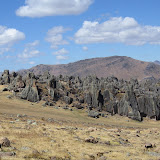
I needed a break from ice and snow in the Cordillera Blanca, as well as from the traffic and holiday festivities of Huaraz. So, I booked a ride to Hatun Machay. I met four Israeli´s on the ride out there and we rock climbed at Hatun Machay (at a mellow 14,000 feet) and stayed in the recently built but rustic refugeo.
 |
| Hatun Machay |
Sunday, July 20, 2008
Alpamayo - French Direct
Alpamayo, Quechua for "muddy river", is one of the most saught after peaks in the Cordillera Blanca. It took us 7 days to climb the mountain with days of hiking, approaching, resting, and climbing. The approach from base camp (14,500 feet) to the high camp (18,000 feet) was through a glacier that required some difficult AI3 ice climbing with heavy packs laidened with supplies for 3 days. After a rest day at the high camp and very little sleep, we set out to climb Alpamayo at 1:30 a.m. The first snow and ice was climbed in the dark by headlamp and a full moon. Temperatures were around 10 degrees F and our insulated water froze. Gu, Snickers, and Powerbars are hard to swallow at 19,000 feet without water. With dry mouths we pushed on through the 65 degree ice. By sunrise we were into the 2nd pitch of ice and were pelted by ice from 4 Peruvian climbers above, erg. We likely sent ice down to the 4 Basque climbers below us! After 4 or 5 long pitches of AI3 ice, we summitted at 10 a.m. at 19,500 feet. We rappeled the route over the Basque folks using old v-threads and fixed pickets and were back at high camp by 1:00 p.m.
Two days after summitting Alpamayo, we arrived at the trailhead at the village of Quechapampa at 5 p.m. Brad and I were worried about not finding a collectivo (inexpensive public bus) for the 3 hour ride to Huaraz. Brad was leaving for Lima the following day, so our urgency to get to Huaraz was hightened. Serendipidously at the trailhead, we met two French climbers hiking out behind us and who´s English and Spanish were as good as my French. Immediately I knew we needed to team with the French to gain a ride to Huaraz at a reasonable fare. Four seconds after meeting the French two taxi´s arrive, one from each direction on the one-lane dirt road that constitutes most of Quechapampa. Juxtiposition in the dirt road - 1 trailhead, 2 dirty Americans, 2 dirty French, 2 white identical Toyota Corolla taxis facing hood to hood, 2 taxi drivers (cabbies), 1 arriero (our burro driver) and 1 overloaded small burro, and 4 idling compensinos (local farmers). The negotiations began with the 12 of us huddled over the hood of a taxi - the cabbies argued 180 Soles, the Americans demanded no more than 80, the French discussed wtih each other and cajoled one cabbie on paper for a price for two to an intermediary village, the compensinos teased the cabbies about overcharging the gringos, the burro was tired, the cabbies were trying not to compete and lower the price, the arriero told the Americans it should cost 120, the Americans insisted the French to join them as a team of 4, the French were still negotiating a 2 person fare to the wrong village, the arriero smiled and laughed, the cabbies began to sweat, the Americans pretended to walk away in disgust, one cabbie broke down to 140 Soles, the Americans emphatically convinced the French that the 4 of us need to take the 140 - its a good deal!
Deal done, but the most dangerous part of the climb comes next. Four climbers and one taxi (all taxis in Peru are late 90s Toyota Corolla wagons with tiny tires) barrel down 4,000 veritcal feet of one-lane dirt road, winding and contouring along the mountain topography tailgating behind a dump truck! The dust behind the truck formed an urban whiteout but the taxi continued to tailgate and honk his horn every 3 seconds signalling his desire to pass. With dust all over the inside of the car and our faces, I had the terrifiying position of sitting in the front seat! Finally passing the truck, the cab continued to race around blind corners honking to alert potential on-coming traffic on the one-lane dirt road. Sitting shotgun, I witnessed the narrow calculated misses of dogs, potholes, other taxis, grandmothers, and children. With each close pass, the cabbie gave a strong 3 toots of the horn. It was a tense 3 hour ride.
Maybe this is why I climb.
-Chris
Two days after summitting Alpamayo, we arrived at the trailhead at the village of Quechapampa at 5 p.m. Brad and I were worried about not finding a collectivo (inexpensive public bus) for the 3 hour ride to Huaraz. Brad was leaving for Lima the following day, so our urgency to get to Huaraz was hightened. Serendipidously at the trailhead, we met two French climbers hiking out behind us and who´s English and Spanish were as good as my French. Immediately I knew we needed to team with the French to gain a ride to Huaraz at a reasonable fare. Four seconds after meeting the French two taxi´s arrive, one from each direction on the one-lane dirt road that constitutes most of Quechapampa. Juxtiposition in the dirt road - 1 trailhead, 2 dirty Americans, 2 dirty French, 2 white identical Toyota Corolla taxis facing hood to hood, 2 taxi drivers (cabbies), 1 arriero (our burro driver) and 1 overloaded small burro, and 4 idling compensinos (local farmers). The negotiations began with the 12 of us huddled over the hood of a taxi - the cabbies argued 180 Soles, the Americans demanded no more than 80, the French discussed wtih each other and cajoled one cabbie on paper for a price for two to an intermediary village, the compensinos teased the cabbies about overcharging the gringos, the burro was tired, the cabbies were trying not to compete and lower the price, the arriero told the Americans it should cost 120, the Americans insisted the French to join them as a team of 4, the French were still negotiating a 2 person fare to the wrong village, the arriero smiled and laughed, the cabbies began to sweat, the Americans pretended to walk away in disgust, one cabbie broke down to 140 Soles, the Americans emphatically convinced the French that the 4 of us need to take the 140 - its a good deal!
Deal done, but the most dangerous part of the climb comes next. Four climbers and one taxi (all taxis in Peru are late 90s Toyota Corolla wagons with tiny tires) barrel down 4,000 veritcal feet of one-lane dirt road, winding and contouring along the mountain topography tailgating behind a dump truck! The dust behind the truck formed an urban whiteout but the taxi continued to tailgate and honk his horn every 3 seconds signalling his desire to pass. With dust all over the inside of the car and our faces, I had the terrifiying position of sitting in the front seat! Finally passing the truck, the cab continued to race around blind corners honking to alert potential on-coming traffic on the one-lane dirt road. Sitting shotgun, I witnessed the narrow calculated misses of dogs, potholes, other taxis, grandmothers, and children. With each close pass, the cabbie gave a strong 3 toots of the horn. It was a tense 3 hour ride.
Maybe this is why I climb.
-Chris
 |
| Alpamayo - French Direct |
Subscribe to:
Posts (Atom)